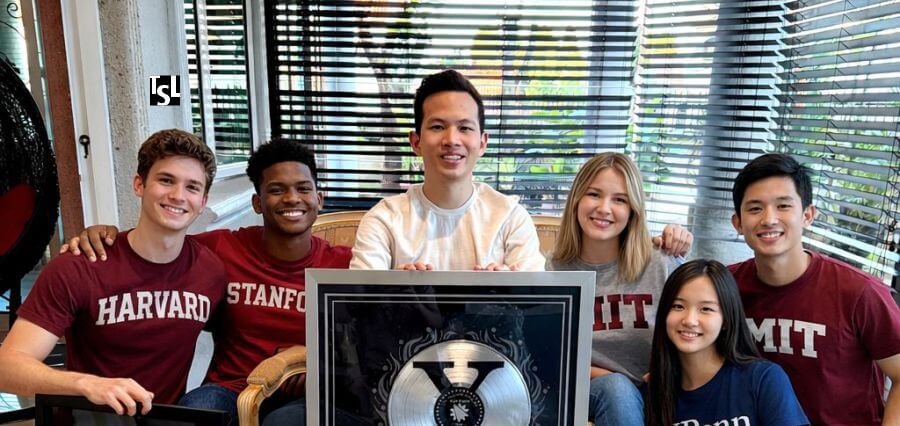
Every year, thousands of high-achieving students receive rejection letters from some of the most selective universities in the world.
For many families, the result is confusing.
The student had a near-perfect GPA.
They took the hardest classes available.
They scored well on standardized tests.
They held leadership roles in clubs and volunteered in their community.
On paper, they seemed like the ideal applicant.
So why are so many “perfect” students still rejected from top colleges?
The answer often lies in a simple reality of modern admissions: being impressive is no longer enough. Students must also be distinguishable.
The Competition Has Never Been Higher
Elite universities now receive more applications than ever before.
Many schools report tens of thousands of applicants each year, with acceptance rates often below ten percent.
Within that pool, a large percentage of students present extremely strong academic profiles.
Thousands of applicants may have:
- Near-perfect grades
- Rigorous coursework
- Leadership roles
- Community service
- Academic awards
When admissions committees review these applications, they are not simply deciding whether a student is qualified.
Many applicants already are.
Instead, they are asking a different question:
Which students stand out enough to shape the incoming class?
Why Academic Excellence Became the Baseline
Grades and test scores remain important, but they increasingly function as a starting point rather than a deciding factor.
Admissions officers expect strong academic performance from applicants to highly selective universities.
Once that baseline is met, committees often look for additional indicators of curiosity, initiative, and potential impact.
This is where differentiation becomes critical.
Students who appear similar on paper can blend together during committee discussions.
Applicants who demonstrate a clear intellectual identity or distinctive body of work may be easier to advocate for in those conversations.
The Difference Between Activity and Ownership
One of the most common reasons strong students blend into the applicant pool is that their achievements follow familiar patterns.
Many students participate in activities organized by schools:
- Student government
- Academic clubs
- Debate teams
- Honor societies
- Volunteer programs
- Pre-college summer programs
These experiences can be valuable, but they are also widely shared among applicants.
A growing number of admissions experts emphasize the importance of student-driven initiatives—projects where the student creates something rather than simply participates.
Examples might include:
- Launching a podcast about a specific academic interest
- Building a small digital platform or app
- Publishing essays or articles
- Creating educational content online
- Starting a focused research or community initiative
These projects demonstrate initiative and intellectual curiosity in ways that traditional activities sometimes cannot.
The Role of Visibility in Modern Admissions
Another emerging factor is visibility.
Many student projects now exist online, which allows admissions officers to better understand what a student has created.
A public project—whether it is a platform, publication, or digital initiative—can serve as supporting evidence of a student’s interests.
Instead of simply describing an activity, the student can show how their ideas translated into real work.
This type of visibility can make a student’s narrative more tangible.
Why Passion Projects Are Becoming More Common
Technology has dramatically lowered the barrier for students to create meaningful projects.
With access to digital publishing platforms, social media distribution, artificial intelligence tools, and no-code development software, students today can launch initiatives that would have been difficult to execute even a decade ago.
This shift has created new opportunities for students to explore academic interests outside the classroom.
Some education programs are now structured around helping students develop these types of initiatives.
For example, Ivy Tier focuses on guiding students through the process of building externally visible passion projects aligned with their academic goals.
Rather than concentrating solely on résumé building, the program emphasizes creating real work that demonstrates initiative and intellectual engagement.
More information about this framework can be found at ivytier.com, and the approach is explained in greater detail in the Ivy Tier masterclass available at join.ivytier.com.
The Bigger Picture
Ultimately, the reason “perfect students” sometimes receive rejection letters is not because they lack ability.
It is often because many applicants appear equally impressive.
In such a competitive environment, the students who stand out tend to be those who have built something distinctive around their interests.
The shift does not mean students should abandon academics or traditional activities.
Instead, it highlights the growing importance of curiosity, initiative, and creativity outside structured environments.
As the admissions landscape continues to evolve, the question students may want to ask themselves is no longer simply:
“What activities should I join?”
But rather:
“What can I create that reflects who I am and what I care about?”
For many applicants, the answer to that question may become the most memorable part of their application.